

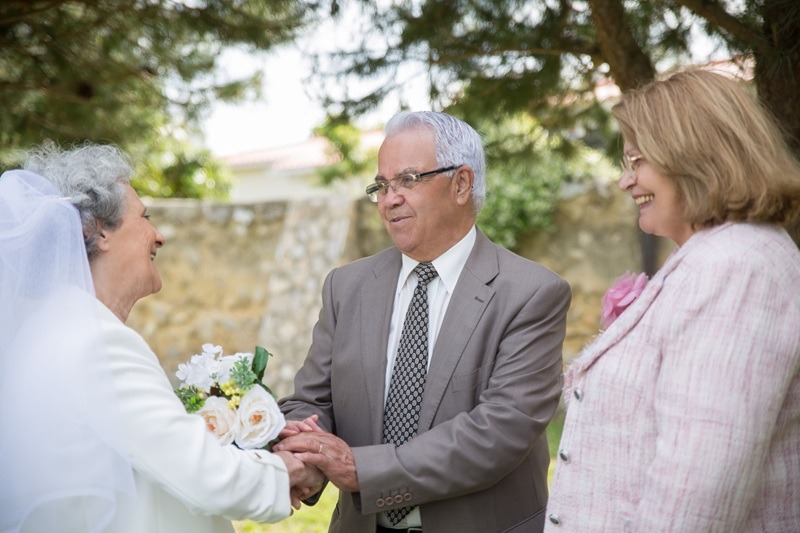
Second marriages look different than they used to. The fastest-growing group of people getting remarried is adults 65 and older. By that point in life, you’ve built something. You have your own accounts, your own home, maybe a business. You have children who are grown or nearly grown. You may have an ex-spouse. Your new partner has all of the same.
That’s not a complication. It’s just reality. And it means the estate planning conversation matters more in a second marriage than it did in a first one, because the default rules of Illinois law weren’t written with your family in mind.
What Happens if You Do Nothing?
If you die without a will or trust in Illinois and you’re survived by a spouse and children, state law splits your estate down the middle. Half goes to your spouse. Half goes to your descendants, divided among them.
Read that again with a blended family in mind. Your new spouse gets half. Your children from your first marriage split the other half. Nobody chose that outcome. It may leave your spouse without enough to stay in the home. It may leave your children waiting on an inheritance that gets tangled up in probate for a year or more. Illinois wrote one formula for every family, and blended families rarely fit it.
A Will Alone Has Limits in a Second Marriage.
Here’s something many remarried couples don’t realize. In Illinois, you can’t fully disinherit your spouse with a will. A surviving spouse can renounce the will and claim a statutory share of the estate instead: one third if you have descendants, one half if you don’t. So a will that leaves everything to your children can be partially overridden after you’re gone.
A will also does nothing for the harder question in most second marriages. What happens to the assets after both of you are gone? If you leave everything to your spouse outright, those assets become theirs. When they later pass, their estate plan controls, not yours. Your children inherit only if your spouse’s plan says so. Plenty of surviving spouses honor that intention. Some don’t, and some simply remarry or update their documents years later without thinking about it.
Why a Trust is Often a Better Tool.
A trust lets you do what a will can’t. You can provide for your spouse and protect your children at the same time.
A common structure works like this. When the first spouse dies, assets flow into a trust that supports the surviving spouse for life. The survivor can live in the home, receive income, and draw on principal under standards you set. When the surviving spouse passes, whatever remains goes to the beneficiaries you named, typically your children.
Your spouse is cared for. Your children’s inheritance is secured. Neither goal comes at the expense of the other.

A trust also keeps your estate out of probate, which in Cook County routinely runs a year or longer. For blended families, avoiding probate has an added benefit: it removes the public forum where old tensions between a stepparent and stepchildren can turn into litigation.
Your Divorce Decree is Part of Your Estate Plan.
If this is a second marriage, there’s usually an ex-spouse, and your divorce didn’t just end a relationship. It created legal obligations that survive it. Many marital settlement agreements require you to maintain life insurance for the benefit of your children or your former spouse until support obligations end. Unpaid maintenance or child support can become a claim against your estate. Those commitments come first, before anything you promise your new spouse.
So before you design the new plan, pull out the old decree. What you’re required to keep in place for your first family shapes what you’re free to leave to your second one. Planning around those obligations is far better than having your executor discover them.
Your Beneficiary Designations May be Outdated.
Retirement accounts, life insurance, and payable-on-death accounts pass by beneficiary designation, not by your will or trust. The designation on file controls, period. If your 401(k) still names your ex-spouse from 2009, that’s a problem your will can’t fix.
Illinois law revokes provisions for an ex-spouse in a will after divorce, and many people assume the same cleanup happens everywhere. It doesn’t. Employer retirement plans are governed by federal law, and the plan administrator pays whoever is named on the form, even a long-divorced ex. The only fix is updating the form itself.
Every remarried person should pull the current designations on every retirement account, insurance policy, and financial account and confirm they match the plan. This is one of the most common gaps we find, and one of the easiest to close.
Prenups, and Couples Who Choose Not to Marry.
A prenuptial agreement is a practical tool for a second marriage, not a sign of doubt. Illinois enforces prenups that involve full financial disclosure from both partners, which means the agreement forces the money conversation many couples avoid. That conversation is a feature.
Some couples in their 60s and 70s decide not to marry at all, often to keep finances fully separate. That’s a valid choice, but understand what it means in Illinois: an unmarried partner inherits nothing by default and has no automatic authority in a medical crisis. If you’re building a life together without a marriage license, the estate plan is doing all of the legal work. It has to be complete.
Schedule a Complimentary Discovery Call.
If you’re entering a second marriage, or you’re years into one and your plan still reflects your old life, it’s worth a fresh look. Schedule a Complimentary Discovery Call and we’ll walk through your family, your obligations, and the structure that protects both your spouse and your children.
Reference: Kiplinger (May 25, 2026) “How to Handle Money Together in a Second Marriage”